Network Device Security for Enterprises_
Protect VPNs, firewalls, routers, and switches from ransomware and nation-state attacks targeting your network edge.
Protect VPNs, firewalls, routers, and switches from ransomware and nation-state attacks targeting your network edge.
Network infrastructure has become the preferred initial access vector for ransomware operators and nation-state threat actors. According to the Verizon DBIR report for 2025, there has been an 8x increase in vulnerability exploitation in network infrastructure. Attackers are moving from endpoints to the devices that connect them, targeting the very infrastructure trusted to protect your enterprise. As threat actors accelerate attacks on network edge devices, Eclypsium provides defenders with visibility and protection that traditional security tools cannot provide.
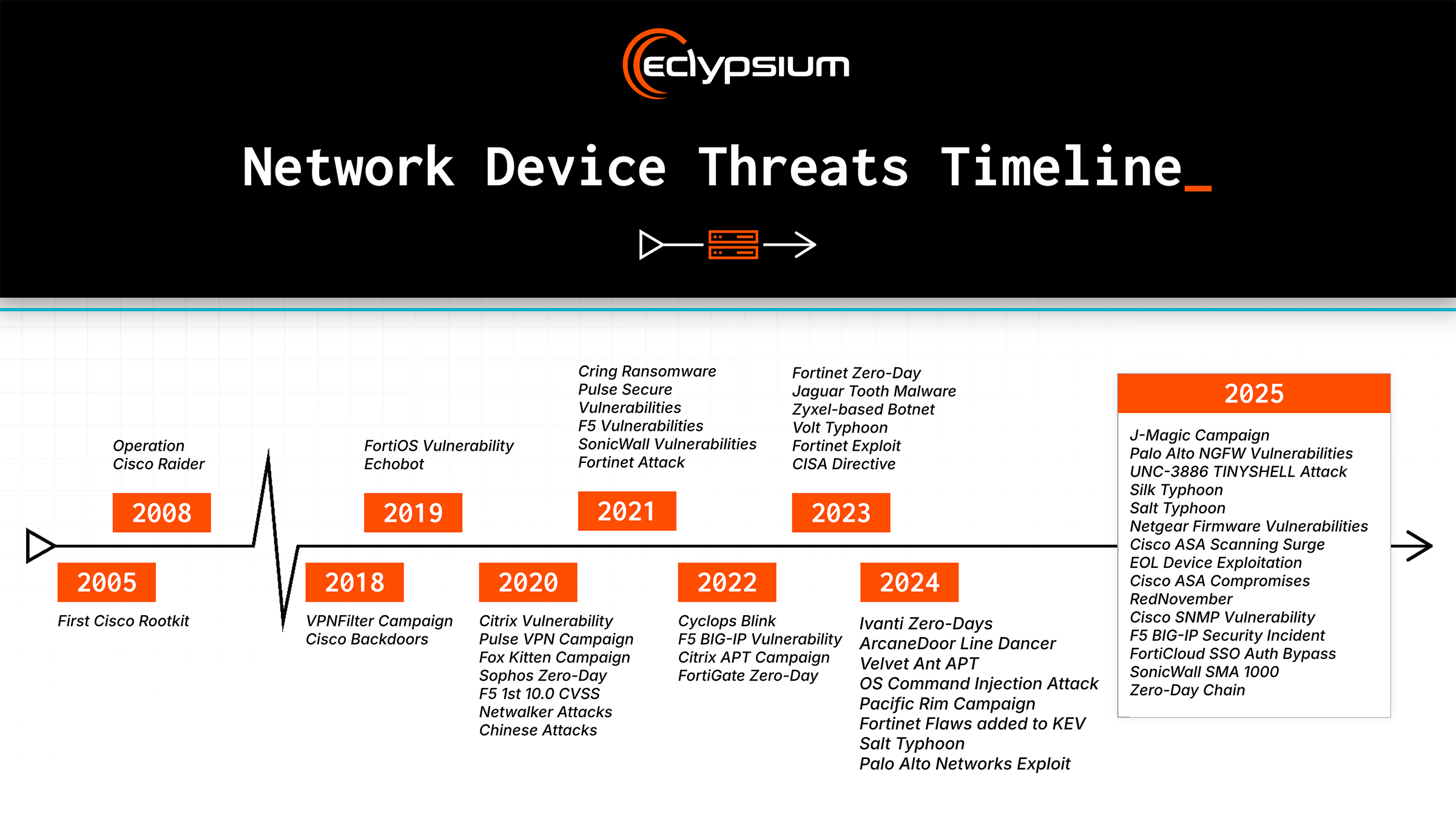











Unlike EDR and legacy vulnerability management tools, Eclypsium provides continuous security monitoring for network edge devices without requiring agents. Our platform covers every major network vendor, providing a single SaaS solution to discover, assess, and protect VPNs, firewalls, routers, switches, and other critical network infrastructure.
Automated Discovery and Inventory
Identify all network devices across your distributed enterprise, including shadow IT and unmanaged devices.
Vulnerability and Risk Management
Continuously scan for vulnerabilities and misconfigurations unique to network device firmware and integrated OS code.
Integrity Monitoring and Threat Detection
Detect compromised firmware, malicious implants, and backdoors that persist below the operating system.
Automated Firmware Updates
Reduce exposure windows by automating firmware updates across multiple vendors and device types.
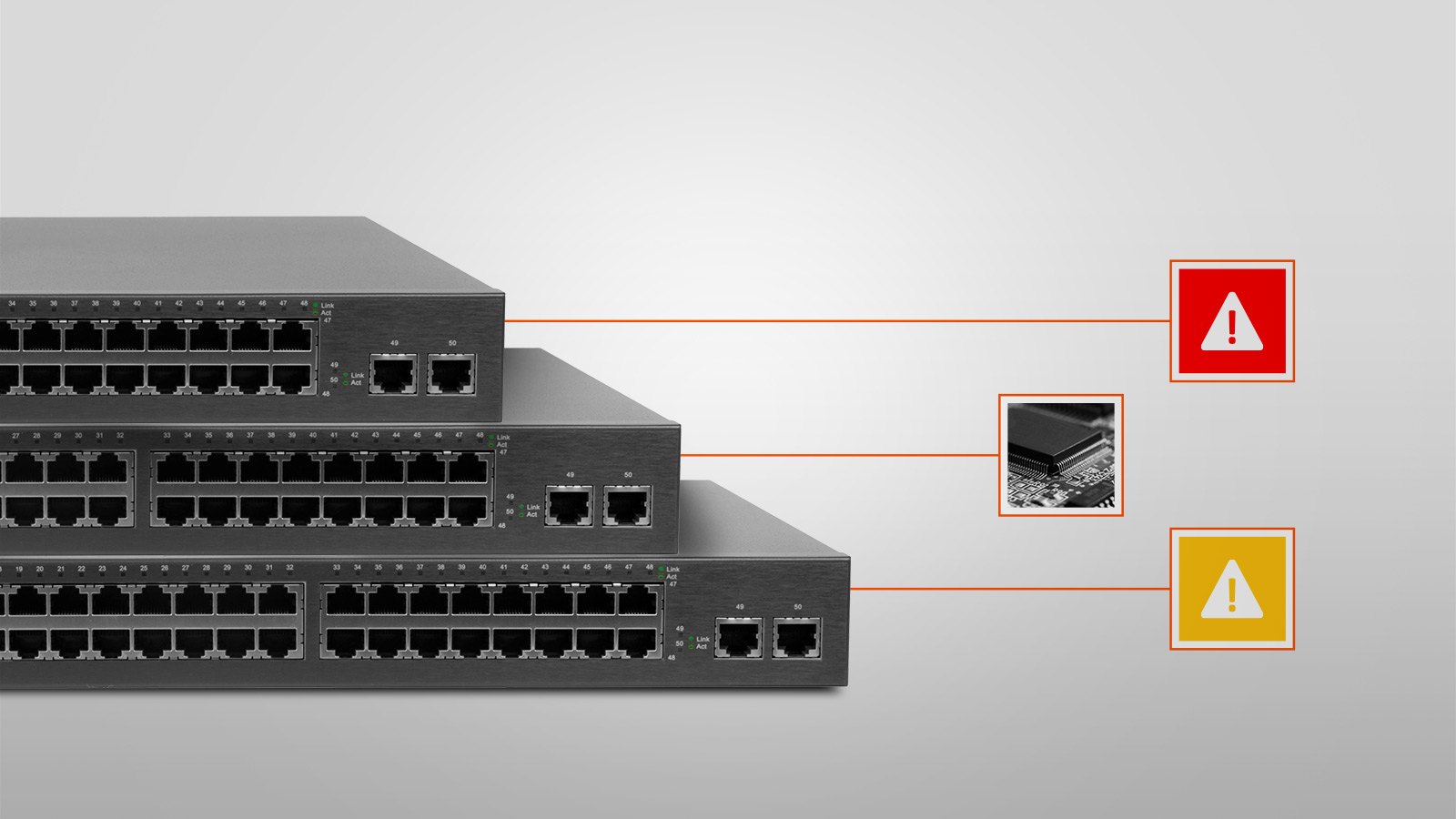
Network infrastructure offers attackers everything they need for a successful breach. These devices provide initial access without phishing, lateral movement to any connected system, and persistence that survives traditional remediation efforts.
“The compromise of routing devices is a recent trend in the tactics of espionage-motivated adversaries as it grants the capability for a long-term, high-level access to the crucial routing infrastructure, with a potential for more disruptive actions in the future. A concerted effort is required to safeguard these critical systems and ensure the continued stability and security of the internet.“
—Mandiant
Initial Access Without User Interaction
Network devices exposed to the internet can be compromised through vulnerability exploitation alone. A 2025 incident showed that up to 2 million Cisco devices were exposed to an SNMP vulnerability over the internet. Initial Access Brokers exploit network devices to gain enterprise footholds that they resell to ransomware operators and APT groups.
Ideal for Lateral Movement
Once compromised, network devices connect to virtually everything in your organization. Attackers use this positioning to pivot to endpoints, servers, and high-value systems while monitoring and redirecting traffic. Attackers persisted in U.S. National Guard infrastructure for over a year, exploiting PAN-OS and Cisco networking equipment to move laterally and evade detection.
Invisible to Traditional Security Tools
Network devices don’t run standard operating systems and can’t support EDR agents. Even in cases where the operating system is a flavor of Linux, it is hidden from the end user, and can’t be instrumented with standard monitoring solutions. Mandiant reported that the APT group UNC3524 persisted undetected in victim networks for at least 18 months by tunneling through compromised network devices.
Edge Device Attacks on the Rise in 2025—Verizon DBIR

Known initial access vectors over time in non-Error, non-Misuse breaches (n in 2025 dataset=9,891)


Network infrastructure security requires different approaches than endpoint protection. Traditional security tools weren’t built to handle the unique challenges of network device firmware, integrated operating systems, and complex hardware supply chains.
Security Tool Blind Spots
Network devices run specialized firmware and integrated OS code like Cisco IOS, F5 TMOS, and Fortinet FortiOS. EDR and standard vulnerability scanners don’t support these systems, leaving security teams without visibility into device integrity or active threats. Network device vendors do not build their solutions to be monitored by existing security solutions, so you have to trust the vendor.
Eclypsium provides deep visibility into network device firmware and integrated code to detect threats EDR can’t see.

Complex Supply Chains
A single network device contains over 100 internal components from multiple suppliers. Each component has its own firmware with potential vulnerabilities. Supply chain attacks can compromise devices before they reach your network.
Eclypsium validates device integrity against vendor SBOMs and detects supply chain tampering before deployment.
Slow Patching Cycles
Taking critical network infrastructure offline for updates creates operational challenges. Updates are delayed while vulnerabilities remain exposed. Attackers know this and target network devices with recently disclosed CVEs faster than organizations can patch.
Eclypsium automates firmware updates and helps prioritize actively exploited vulnerabilities to reduce exposure windows.
Identify and Inventory
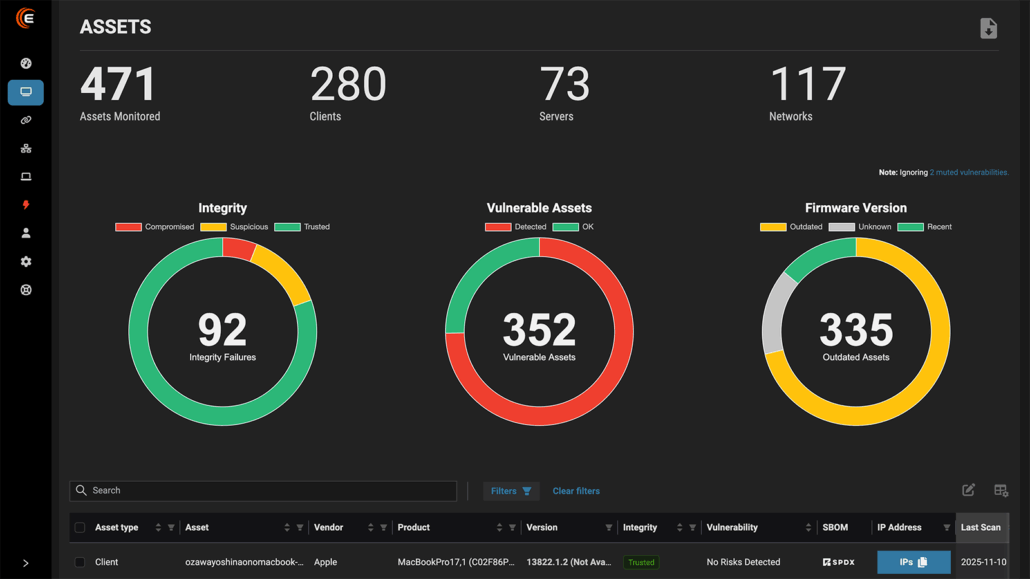
Get a complete inventory of network devices across your distributed enterprise, even if you have multiple vendors in your environment. Discover shadow IT, identify firmware versions, and track which devices are current or vulnerable. Validate device security during procurement, deployment, and throughout the operational lifecycle.
Verify and Validate
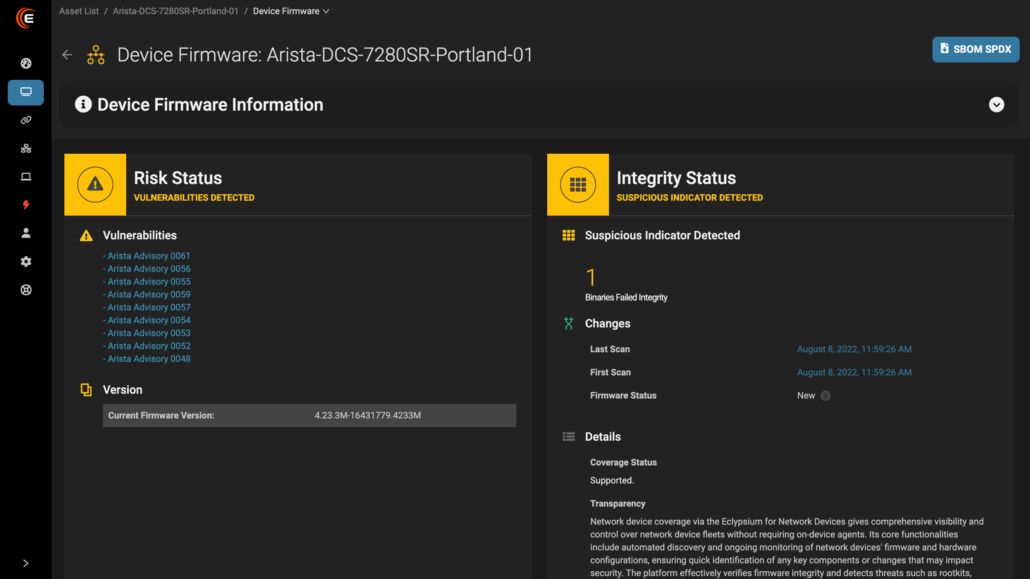
Confirm that network devices haven’t been compromised or tampered with. Compare actual device firmware against vendor-published code to detect malicious modifications, backdoors, and persistence mechanisms.
Fortify and Harden
Assess device configurations for security weaknesses. Identify exposed management interfaces and insecure settings. Automatically update firmware across multiple vendors to keep infrastructure protected.

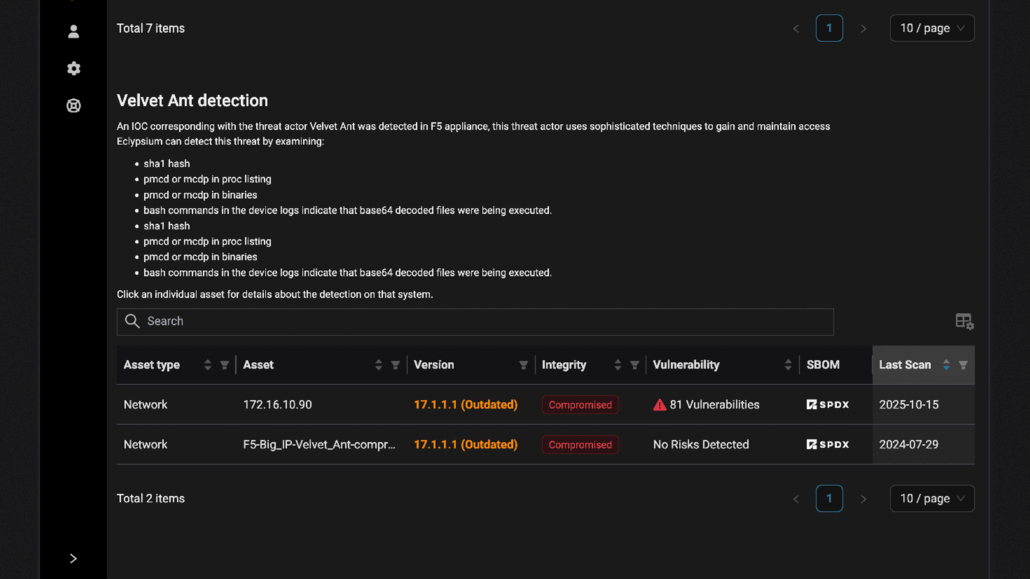
Detect Known and Unknown Threats
Identify active compromises including malicious firmware modifications, reverse shells, persistence modules, and indicators of compromise. Behavioral monitoring detects threats even when they’re unknown or introduced through vendor updates.