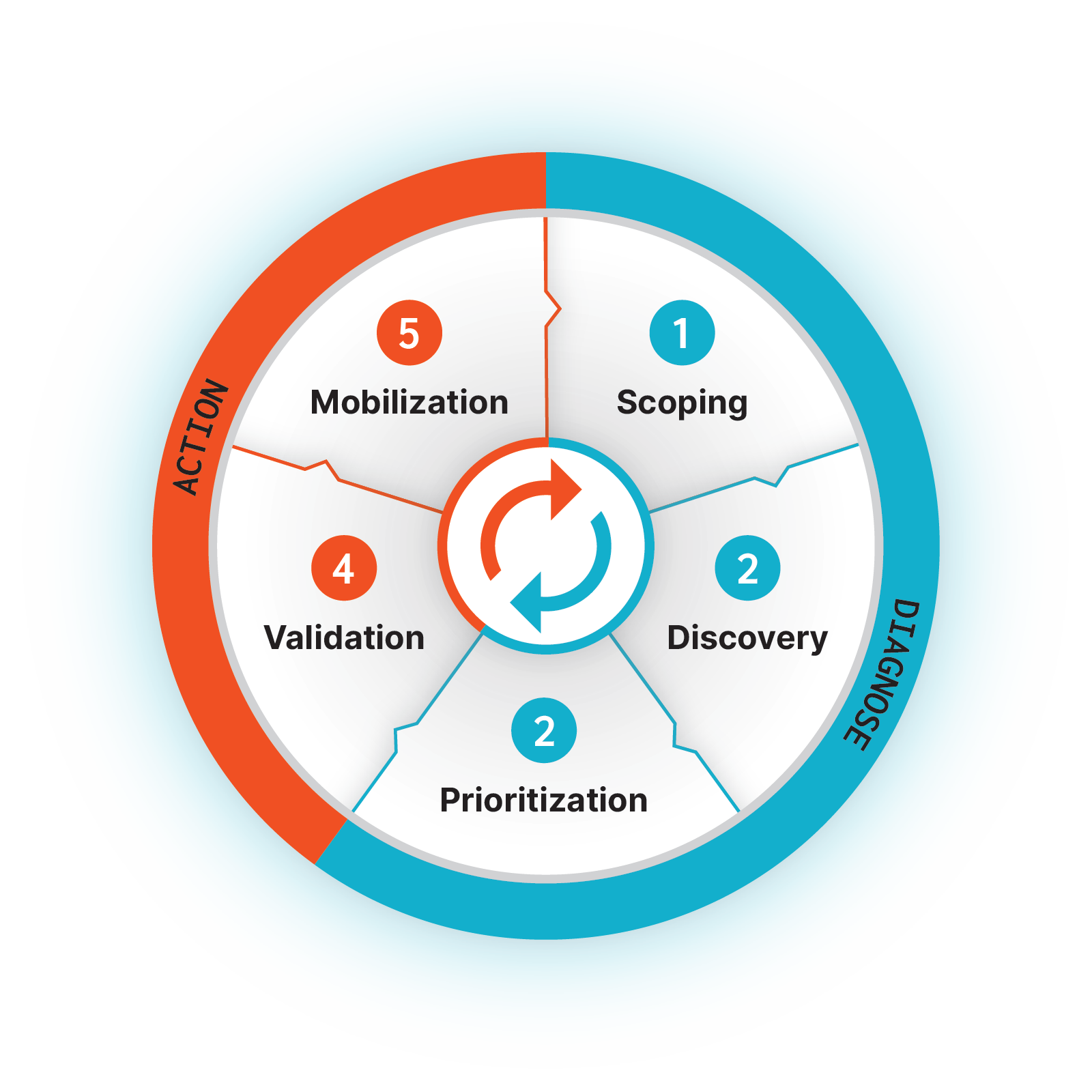
Continuous Threat Exposure Management (CTEM)
Extend your CTEM program to the business critical attack surfaces traditional security tools miss: firmware, network infrastructure, and hardware supply chains.
TRUSTED BY LEADING ENTERPRISES





Extend your CTEM program to the business critical attack surfaces traditional security tools miss: firmware, network infrastructure, and hardware supply chains.
CTEM Addresses the Gaps That Leave Organizations Exposed
Median time for edge device vulnerabilities to be exploited in the wild.
Verizon DBIR 2025
Median time to patch an edge device vulnerability.
Verizon DBIR 2025
less likely to suffer a breach when organizations prioritize security investments based on a continuous exposure management program.
Gartner, Top Strategic Technology Trends 2024
Eclypsium discovers vulnerabilities in endpoints, servers, and network infrastructure that traditional security tools can’t see. Our platform provides comprehensive visibility into firmware, BIOS, UEFI, BMC, and hardware components—scanning down to the chip level where advanced threats, from Chinese APTs to ransomware gangs, hide and persist.
Unlike endpoint detection tools that only monitor the operating system layer, Eclypsium’s unique binary analysis capabilities identify zero-day vulnerabilities and firmware implants that evade traditional security measures. Unlike vulnerability managers that only conduct firmware version comparisons on endpoints, Eclypsium extracts and analyzes firmware on endpoints, servers, and network devices to catch stealthy vulnerabilities other tools miss.
The Big CTEM Blind Spot
Most CTEM implementations have a significant blind spot. While they cover cloud workloads, applications, and endpoints at the OS level, they miss the foundational infrastructure layers that attackers increasingly target: device firmware, network appliances, and hardware supply chains. The firmware and hardware layer of network edge devices and user endpoints is where much of that growth will occur, which fits perfectly into the intersection of Assets Outside of Core Security Controls, with Exploitable Vulnerabilities and Business Critical Functions, are the most critical to address.
That’s exactly where Eclypsium fits in.

Inventory every device down to its hardware, firmware, and embedded software components. Gain visibility into system UEFI/BIOS, baseboard management controllers, network interface cards, and other components that traditional asset management tools miss entirely. Monitor for unexpected change and configuration drift to catch widening security gaps early.

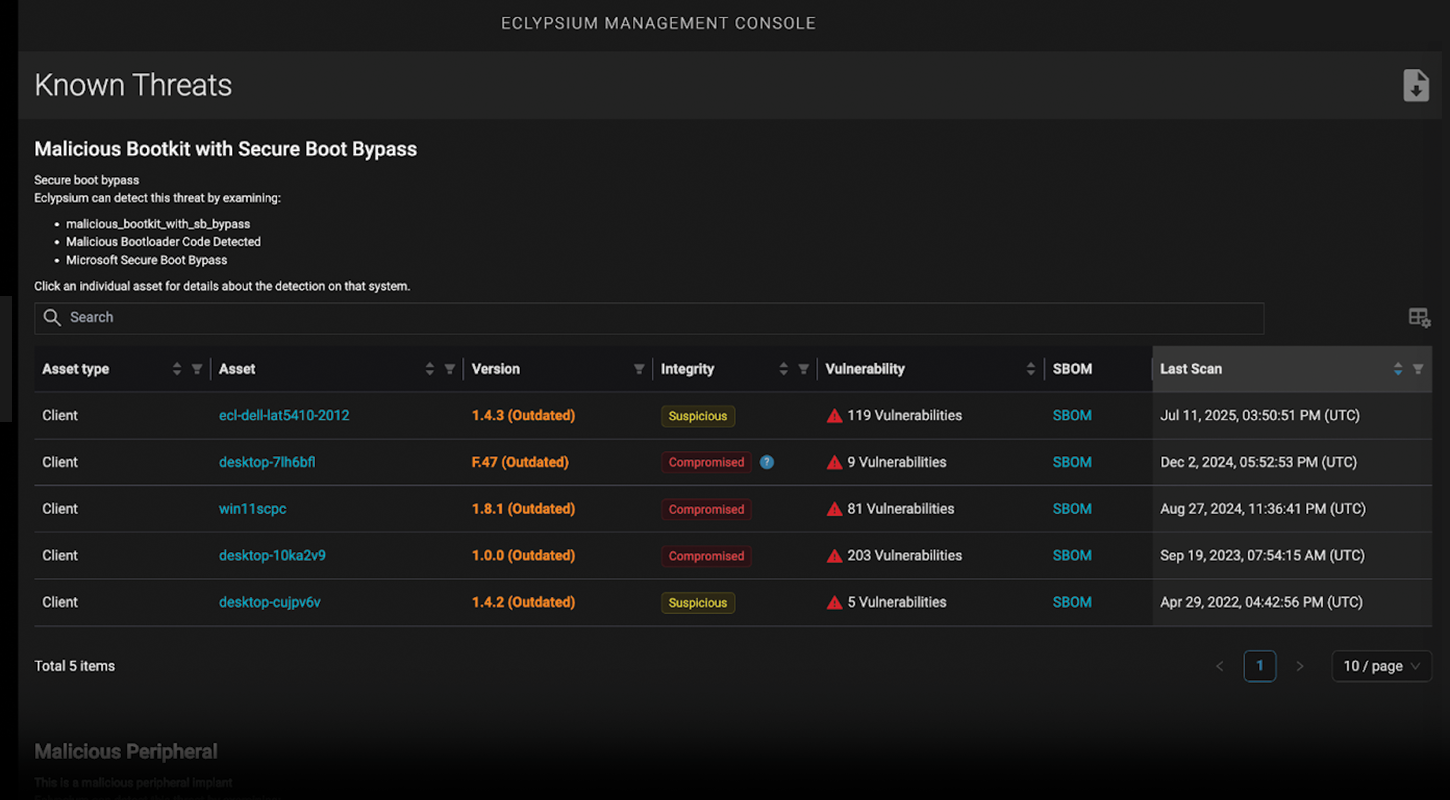
Surface firmware vulnerabilities, misconfigurations, and outdated code across endpoints, servers, and network infrastructure. Identify exposures in components that don’t support agents and aren’t covered by conventional scanners.
Assess exposures in business context rather than relying solely on CVSS scores. Understand which firmware vulnerabilities affect critical assets and which represent actual attack paths versus theoretical risks.

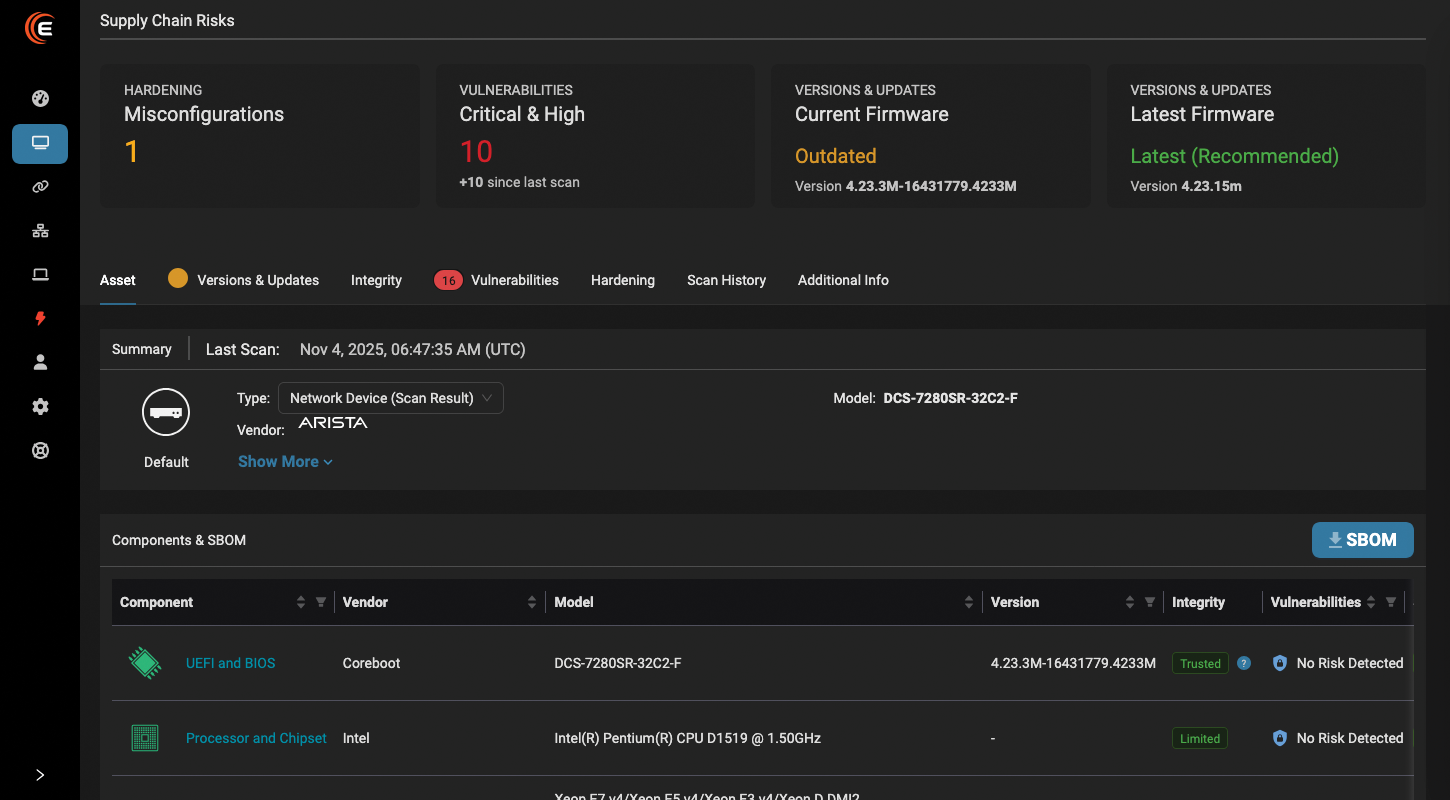
Generate SBOMs, firmware BOMs, and hardware BOMs to validate device integrity against vendor baselines. Detect tampering, backdoors, and implants that may have been introduced before equipment reached your environment—or after.
Most organizations implementing CTEM programs focus on the assets they can already see: cloud infrastructure, applications, and endpoint operating systems. But firmware runs on every server, laptop, firewall, and router in your environment. Network appliances sit at critical chokepoints. And hardware supply chains introduce risk before devices are even deployed.
Eclypsium helps security teams extend CTEM principles to these foundational layers by providing:
Visibility into network infrastructure including firewalls, VPNs, routers, load balancers, and switches from Cisco, Fortinet, Palo Alto, F5, Juniper, and all major enterprise network vendors. Read about how Eclypsium protects devices that don’t support endpoint agents but increasingly serve as entry points for attackers.
Detection of component and firmware-level threats including bootkits, rootkits, and implants that persist below the operating system, or in the baseboard management controller (BMC), or smart network interface card (NIC) and survive reimaging, patching, and even hardware replacement in some cases. Read about how Eclypsium detects and protects against stealthy persistent threats below the surface.
Continuous integrity monitoring that identifies unauthorized changes to firmware, configurations, and boot processes—the techniques used by nation-state actors and increasingly adopted by ransomware operators. Read a case study about how Eclypsium detected numerous configuration and integrity issues for a global satellite communications provider.
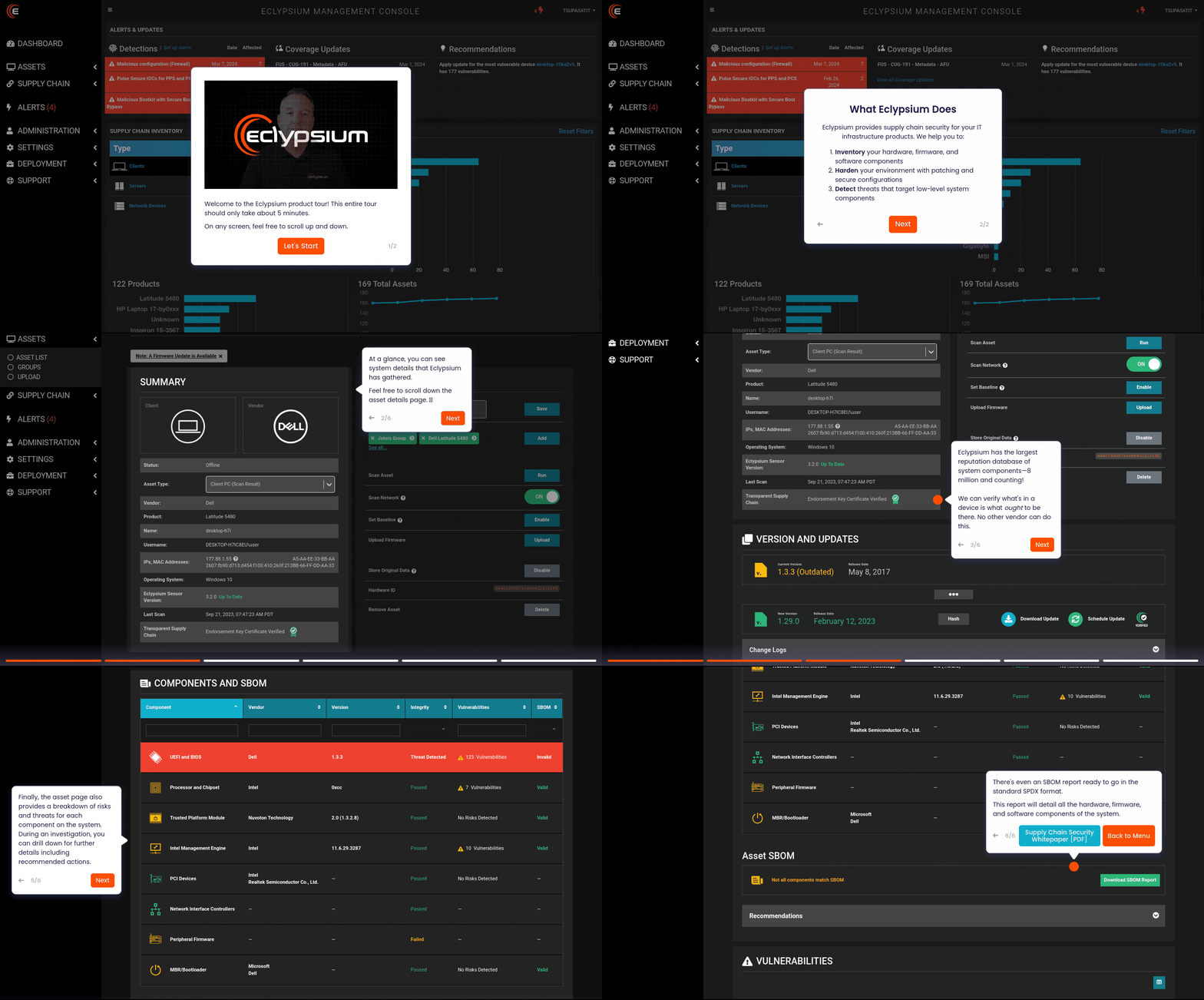
To learn more about how Eclypsium helps extend CTEM to your hidden attack surface, take our self-guided product tour, or request a live demo.