Secure Your AI Infrastructure.
Deploy and run your AI models and data on GPU compute infrastructure you can verify and trust.
AI data centers are being built faster than the security around them has matured. GPUs, accelerators, AI servers, and the network devices that connect them are blindly trusted to arrive secure. They arrive carrying vulnerabilities, misconfigurations, and in some cases tampered or counterfeit components introduced throughout the supply chain. Each server holds dozens of components, hundreds of dependencies, and thousands of binaries. That hardware is expensive, scarce, and frequently shared between customers. Leading AI cloud service providers use the Eclypsium infrastructure assurance platform to verify it.



Global Neocloud Provider
turns over trusted AI hardware to next customers in minutes rather than days. Saving hundreds of thousands in asset utilization.
The Eclypsium infrastructure assurance platform protects mission critical devices at the hardware layer. In an AI data center that means NVIDIA GPUs and accelerators, x86 and ARM servers, BMCs and management controllers, and the firewalls, routers, and switches in the same environment. Eclypsium verifies, hardens, and detects threats across your entire fleet in a single platform.
Compare your AI hardware against the gold standard.
How do you know the GPUs and servers in your data center are as expected? Eclypsium maintains an industry-leading reputation database of over 30 million known-good device binaries, and compares every device in your infrastructure against it. You get component-level SBOM, FBOM, and HBOM for each GPU server, integrity monitoring against baselines you set, and detection of tampered or counterfeit components.
Mitigate hidden risks in AI hardware.
How do you mitigate vulnerabilities and misconfigurations in GPUs, servers, and components? Eclypsium identifies vulnerable GPU firmware and drivers, BIOS and UEFI issues, exposed management controllers, and configuration weaknesses that traditional vulnerability scanners do not analyze. Findings arrive with severity context, recommended mitigations, and whether the vulnerability is known to be exploited in the wild. Firmware updates can be scheduled and applied automatically.
Catch attacks that survive reboot, reimage, and patching.
How do you know a GPU server is clean before you hand it to the next customer or start the next training run? Eclypsium detects indicators of compromise, malicious behaviors, firmware implants, and persistent compromises in AI infrastructure devices, including attackers living off the land in hardware that other security tools cannot see.
Secure the Hardware Supply Chain Before Deployment
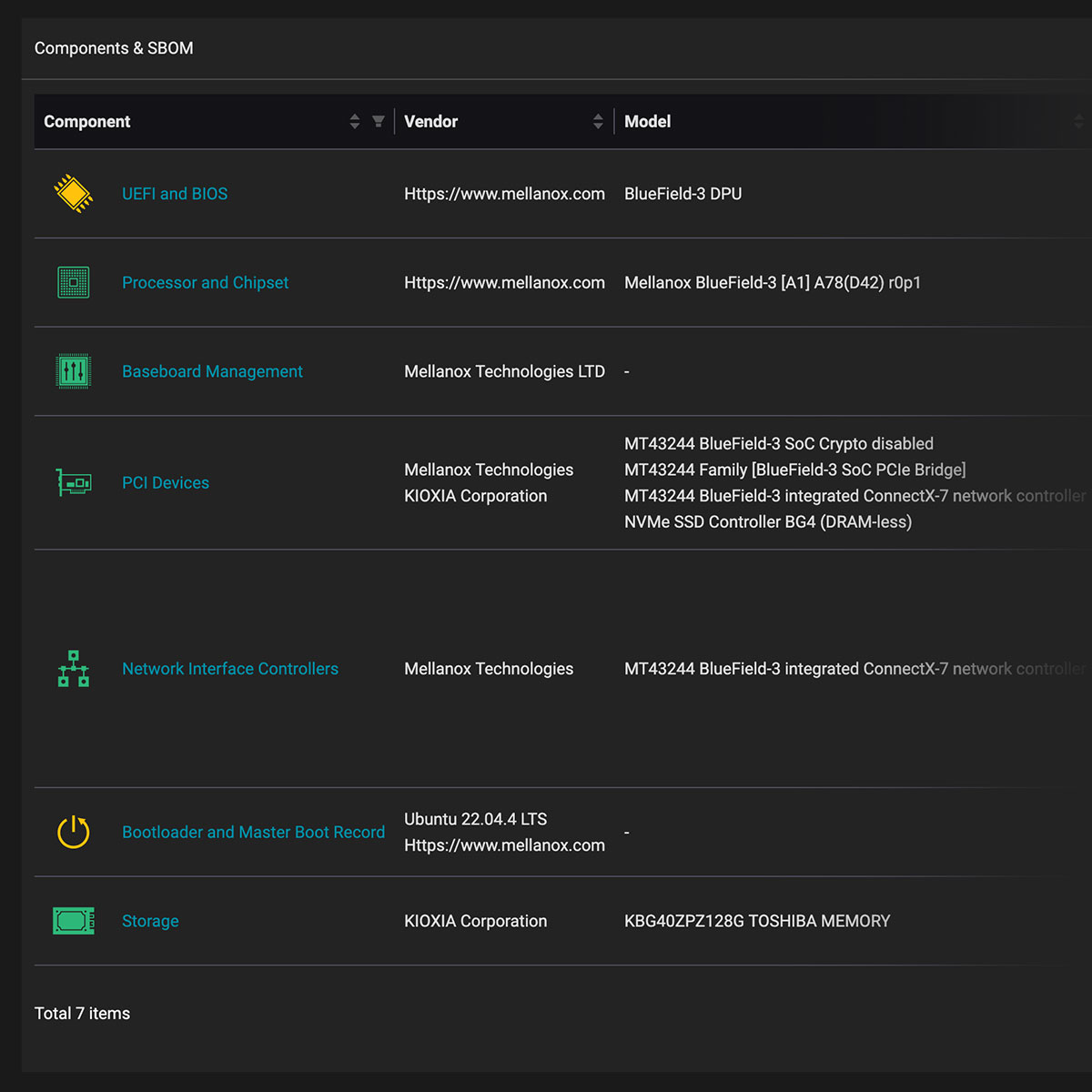
Verify the integrity, security, and provenance of every GPU server before it enters the fleet. Eclypsium returns a complete component inventory, firmware and driver versions, known vulnerabilities, and integrity results that identify tampered or counterfeit components. Verify the SBOM and HBOM of each device entering your fleet rather than trusting the vendor’s.
Secure the Hardware Supply Chain Before Deployment
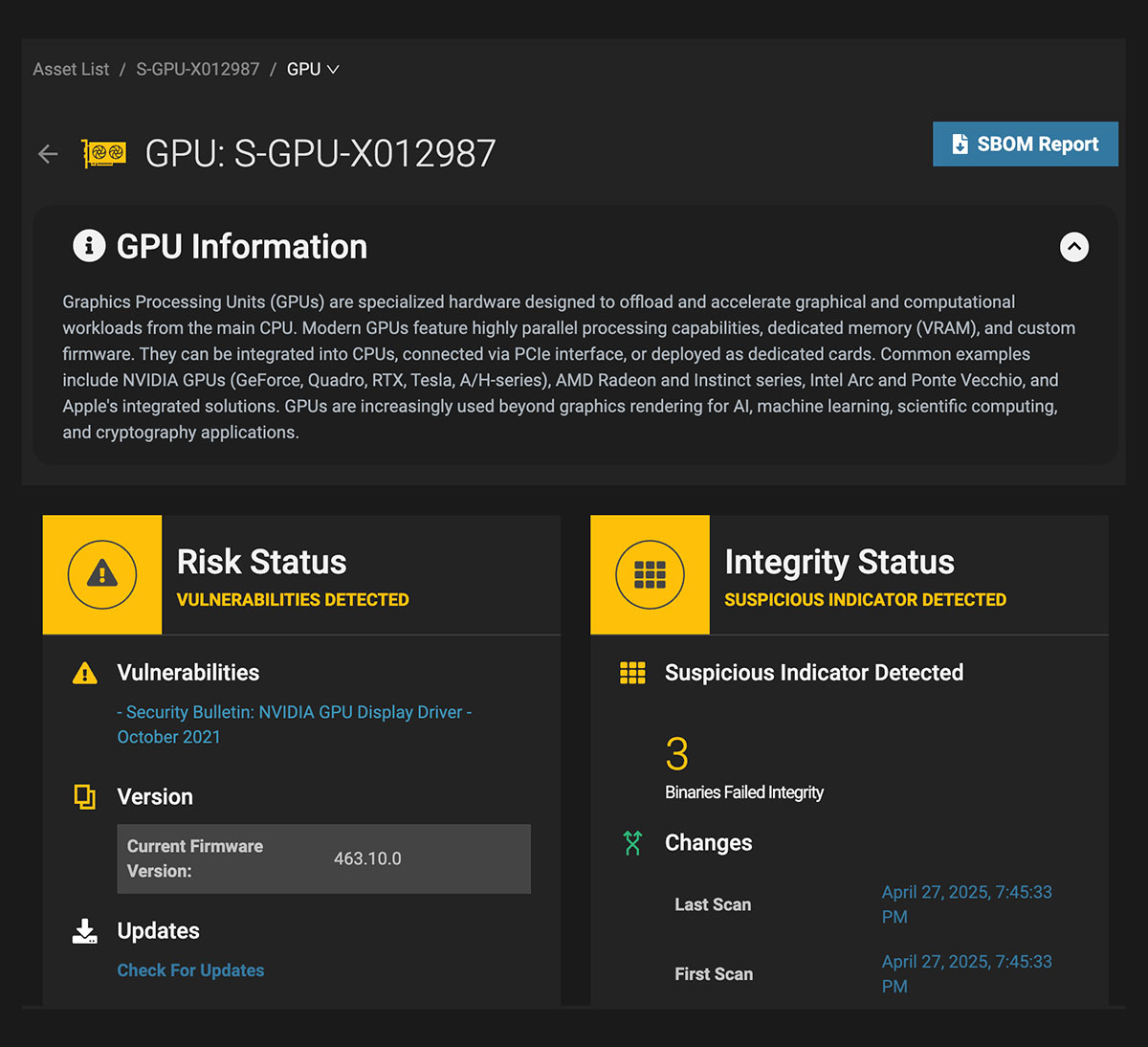
Eclypsium delivers actionable summaries of vulnerabilities and integrity failures for a single GPU or for every GPU in a data center. Confirm that firmware and configuration are clean before releasing shared AI resources to the next customer, and return hardware to revenue in minutes rather than days.
Monitor the Entire Fleet in Production
Continuously verify the integrity of your entire device fleet and detect compromised or rogue devices. Eclypsium monitors firmware and configuration against your baselines, flags drift, surfaces newly disclosed vulnerabilities affecting your hardware, and detects active threats, without installing forensic agents on every node.
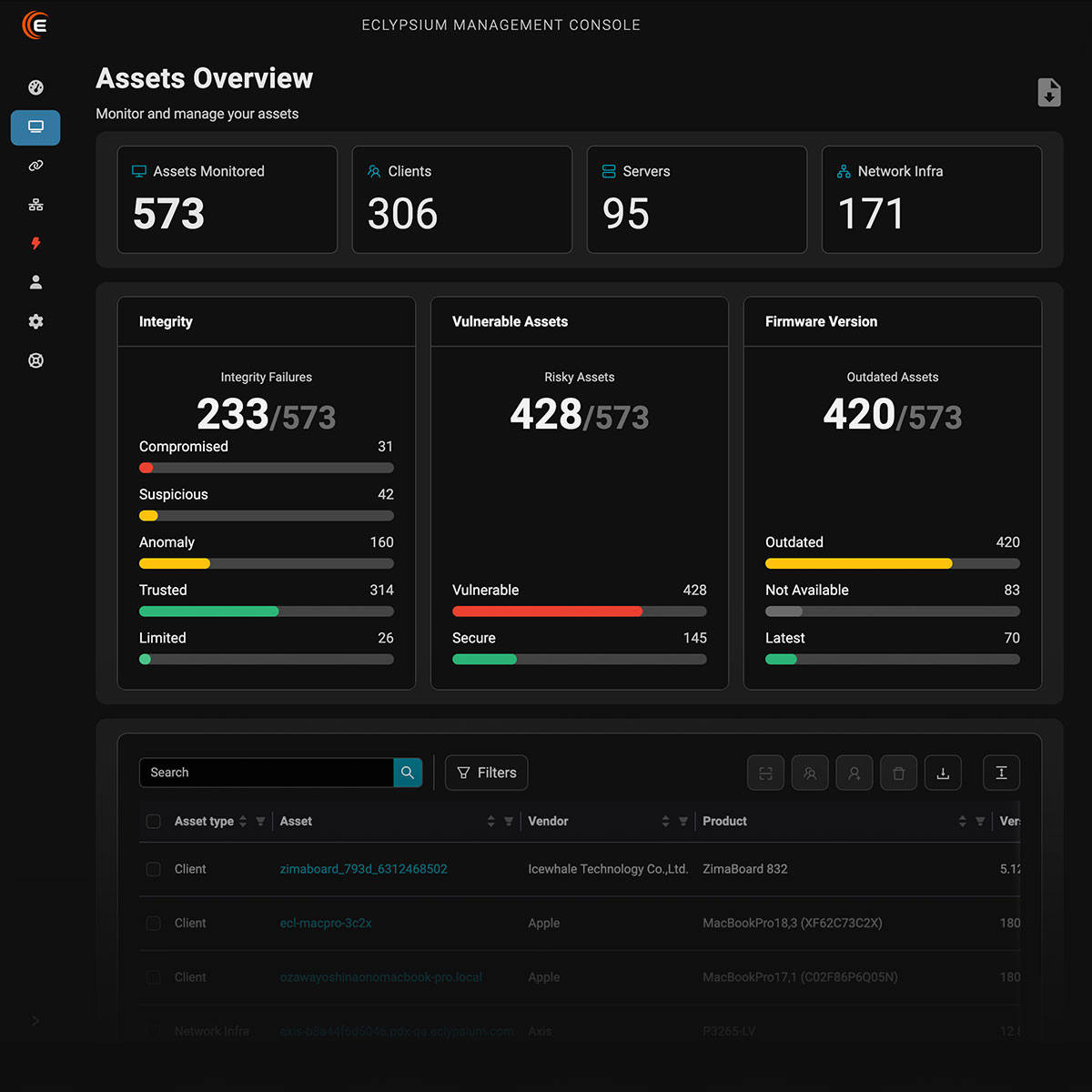
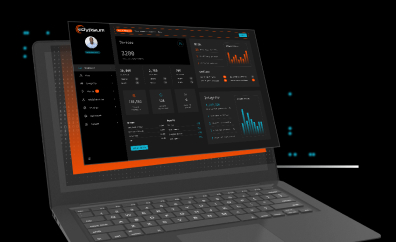
See how Eclypsium monitors and protects GPUs at the firmware and component level across an entire AI data center fleet.
Eclypsium provides the visibility and controls that support many regulations, compliance initiatives, and standards, including NIST 800-53, the EU CRA, DoD Zero Trust target levels, and Cyber Supply Chain Risk Management programs. Two frameworks speak directly to AI infrastructure.
NIST AI Risk Management Framework
The AI RMF manages risk across the AI lifecycle through four functions: Govern, Map, Measure, and Manage. Most of the framework addresses the model itself, its data, its behavior, and its impact on people. Every AI system also runs on physical infrastructure that carries its own risk.
Eclypsium supports the subcategories where infrastructure integrity is the control. It does not measure bias, fairness, or explainability. It answers a different question the framework raises directly: can you prove that the compute and supply chain running your AI are authentic, current, and free of compromise?
Subcategory | Framework outcome | How Eclypsium contributes
|
|---|---|---|
GOVERN 1.6 | Mechanisms are in place to inventory AI systems | Component-level inventory (SBOM, FBOM, HBOM) of the hardware and firmware that make up AI infrastructure |
GOVERN 6.1 | Policies address AI risks associated with third-party entities, including supply chain and hardware | Continuous evidence that hardware and supply chain policies are enforced across deployed devices |
MAP 4.1 | Third-party material, including hardware, is inventoried | Automated hardware, firmware, and software bills of materials for GPUs, servers, and network devices |
MAP 4.2 | Internal risk controls for third-party components are identified and documented | Vets acquired hardware and firmware for vulnerabilities, misconfigurations, and integrity before and after deployment |
MEASURE 2.7 | AI system security and resilience are evaluated and documented | Verifies device integrity, detects tampered and counterfeit components and firmware implants, and identifies known and unknown vulnerabilities |
MANAGE 2.2 | Deployed systems are sustained, and drift is detected | Monitors firmware and configuration drift against established baselines and flags integrity changes |
MANAGE 3.1 | Risks from third-party resources are regularly monitored and controlled | Continuously monitors third-party hardware, firmware, and software components in production and applies mitigations |
SP 800-223 gives organizations a reference architecture for HPC systems, a threat analysis across four functional zones, and a set of best-practice recommendations. HPC is now the foundation for AI training and inference, which makes these systems a priority for enterprises, neoclouds, and government programs.
Much of the publication addresses the hardware and firmware HPC depends on: compute nodes packed with GPUs and accelerators, out-of-band management controllers, high-speed interconnects, and the components inside each of them. It recommends validating firmware, confirming that critical files have not changed, and monitoring integrity across the system. Those are the problems Eclypsium is built to solve. Eclypsium complements the network segmentation, authentication, container, and data encryption controls the publication also
SP 800-223 area
| What it addresses | How Eclypsium contributes
|
|---|---|---|
Management zone and out-of-band hardware management (§2.1.7, §4.1)
| BMC/IPMI and BIOS/UEFI firmware that operate independently of the host operating system
| Verifies integrity and detects vulnerabilities in management controllers, BIOS, and UEFI, and identifies firmware implants that survive reboot
|
HPC zone threats (§3.2.3)
| Accelerators, GPUs, and high-speed interconnects that may be under-tested from a security standpoint
| Continuous integrity monitoring and known and unknown vulnerability detection for GPUs, accelerators, and networking components
|
Compute node sanitization (§4.2)
| Validating firmware and confirming that critical files are unchanged so nodes start clean between jobs
| Validates firmware against known-good baselines, verifies component integrity, and detects tampered or counterfeit components
|
Data and firmware integrity protection (§4.3)
| Detecting unauthorized modification through hashing and integrity checks
| Baselines and monitors firmware and system file integrity across the fleet and flags unauthorized changes
|
Hardware and firmware supply chain (§2.1.14, threat analysis)
| Vendor- and site-provided components that carry supply chain risk
| Generates component-level SBOM, FBOM, and HBOM and analyzes binaries to surface supply chain risk in HPC hardware and firmware
|
HPC-scale security tooling (§4.6)
| Enterprise tools built for single devices that struggle across large HPC fleets
| Monitors firmware and infrastructure across large fleets, including GPU clusters, without installing forensic agents on every node
|
Trust Your AI Infrastructure.
AI infrastructure is becoming national critical infrastructure. The hardware layer deserves the level of security monitoring that has long been standard for apps and users. Eclypsium continuously scans GPU servers, NVIDIA hardware, and foundational components to verify integrity, detect vulnerabilities, and monitor for attacks across high-performance computing environments.
Stop assuming your infrastructure is trustworthy. Start verifying it.